
Gastropoetics in translation: “Taiwan Travelogue” under review
There are some books that you just cannot put down. Taiwan Travelogue is one of them for me. When I first got my hands on it back in April, I was not quite sure what to expect. I knew it was a fictional translation of a travel memoir set in 1930s Taiwan. I knew that it had received great praises for its descriptions of food and that the protagonists were two women. Everything about its premise seemed to be right up my alley. And indeed it was!
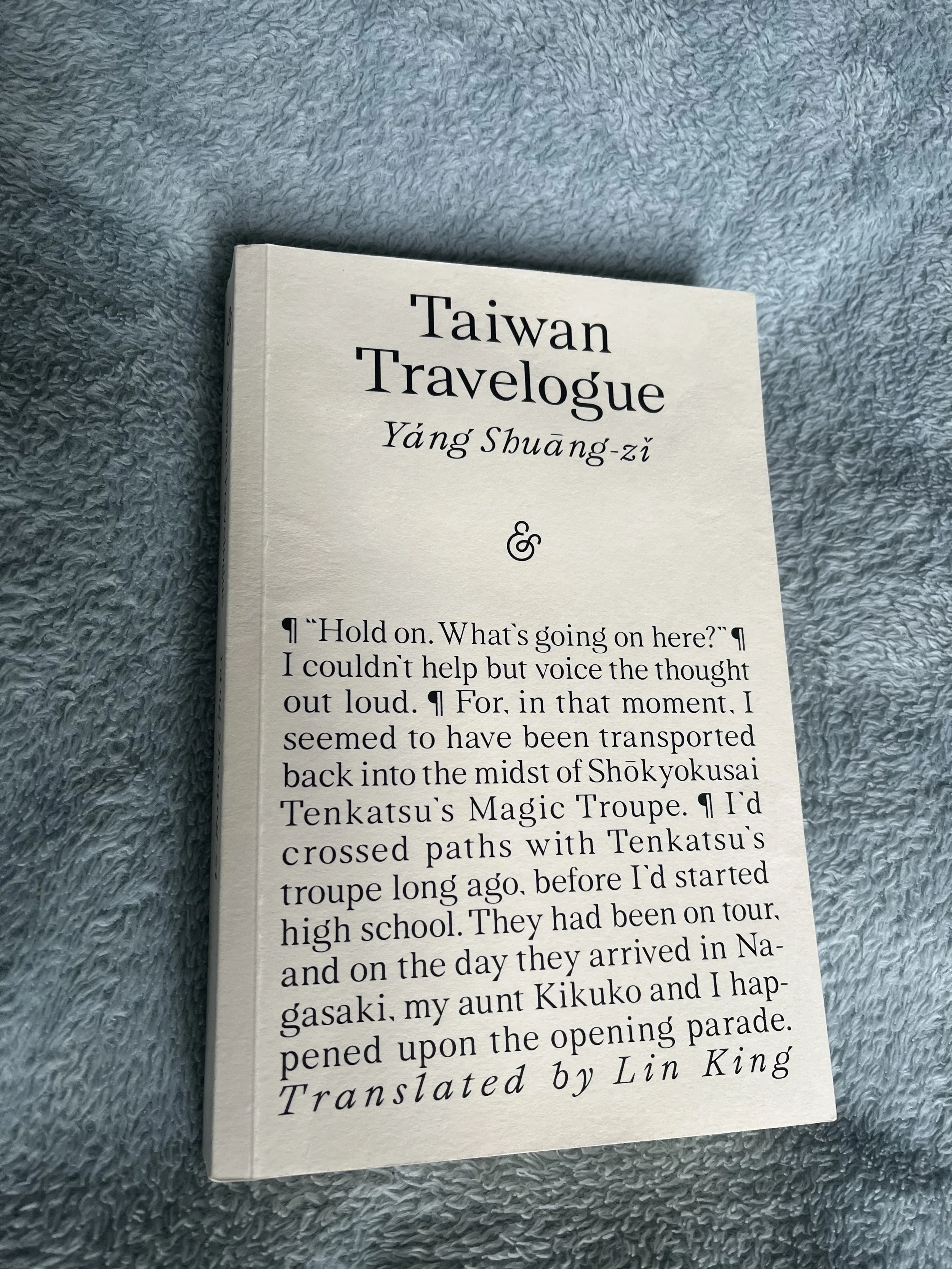
Winner of the “2024 National Book Award for Translated Literature” and the “2026 International Booker Prize” amongst others, Taiwan Travelogue is a unique piece of writing. Written by Taiwanese author Yáng Shuāng-zǐ and translated in English by Lin King, the book is rich in cultural nuances, historical tensions and sensory descriptions. Food is centrestage, but so are the impacts of Japanese colonialism on the island, the underlying class and social divides as well as love: the love that grows between the protagonist (Aoyama Chizuko, a fictional Japanese writer who has been sponsored to tour and report on Taiwan) and her local translator (Ō Chizuru).
The novel, narrated in the first person by Aoyama Chizuko, follows their expeditions around Taiwan and their growing relationship. Emotions subtly seep through each chapter, highlighting a blend of emotional restraint, hunger, curiosity and desire in quite poetic ways. Quite notable, for example, is the frequent mention of a Noh Mask (a type of wooden carved mask used in traditional Japanese theatre performances) to express the emotionless - or, better said, controlled - facial expressions of Ō Chizuru.
The footnotes are what makes the book truly stand out. The translator - and by translator I mean the real one, Lin King - truly makes the book come to life. She provides linguistic explanations and contextualises places, foods and expressions in a way that makes the storytelling ever more so layered. They help towards deconstructing the gastropoetics of Taiwanese culinary heritage in a way that has not quite been done before.
Gastropoetics is one of those terms that has been used in cultural studies and anthropology alike to describe the relationship between food and cultural practices, especially how they appear in literature. It refers to food’s ability - or rather the ability that descriptions of food have - to tell a story. Gastropoetics essentially looks at how food becomes an integral part of a story, shaping its narrative and symbolisms.
Food scenes in Taiwan Travelogue do exactly that. Each chapter focuses on a particular dish but many others are introduced along the way too. Rather than just making you hungry - which the book does in almost every page - the narration moves forward through rich sensory descriptions of food encounters, tastings and even recipes. It is through food, its preparation and the search for the best dishes that we get to learn about the two main leads’ background, their memories, their craving and what they value in life. It is also through food that their relationship deepens. Food becomes more than a way for them to spend time together. It turns into a multi-dimensional tool through which they express care for each other, and build emotional intimacy.
It is also through food that we learn about the history of the island, the evolution of its cuisine and its many influences. Multiple underlying themes are exposed through the way the two women talk about dishes and different characters’ association with foods, drinks and culinary practices. Power and identity are two particularly salient themes in these discussions. Food experiences in the novel shine a light on the tensions that arise in colonial settings, the power dynamics therein, and the erasure of native Islanders’ traditions. There is also a clear emphasis on taste and how classist expectations were being set around food preferences. Despite Aoyama Chizuko’s insistence in wanting to try local specialities, most officials try to impress her with Japanese-inspired dishes. It is only, again, Ō Chizuru that takes on the challenge of showing what the island can offer, and embraces her role as both a translator and cultural mediator.
Although, at times, very dense in historical references and background information, the novel beautifully pays tribute to Taiwanese culinary heritage, and highlights the importance of local craftsmanship as much as seasonality. It is a testament of how complex and diverse regional cuisines can be. The mouthwatering descriptions are a wonderful demonstration of food writing, and so are the elusive yet consistent links to social issues of that period of time. After being charmed by how independent and daring the two female leads are, you might get disappointed by how the story ends up (no spoilers, I did). But you will certainly not get disappointed by the book’s commitment to celebrate Taiwanese food and its history. That’s applause-worthy, even more so in translation.